


Google Gemini Controls Google Home via Nest Cameras
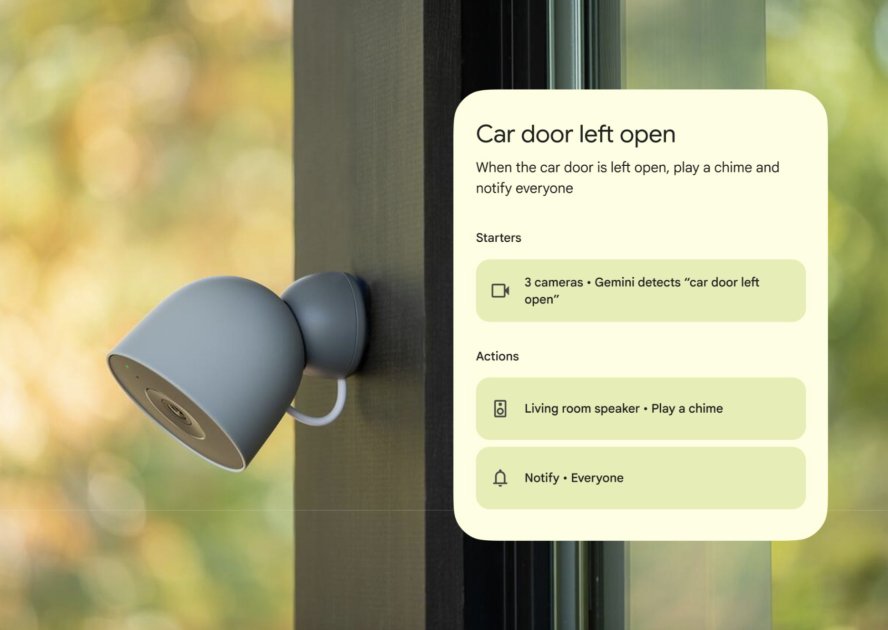
Google today introduced a significant update for its AI assistant Gemini for Home. This update allows users to control their Google Home via Google Nest cameras as well as selected third-party cameras. The new features are based on Gemini's ability to recognize and respond to specific events in real-time. With the update, users can set up automations for their home triggered by specific events. For example, Gemini can detect when an orange cat appears in the frame or when a car leaves the driveway.
Users can describe these events in natural language and specify which cameras should monitor for these occurrences. The automations that can be triggered by Gemini are diverse. Google employees have provided examples such as dimming lights, turning up the heating, or playing a playlist when a yoga mat is detected in the living room. Another feature is notifying the user when the mail carrier passes by the mailbox. Currently, Google Home users in the U.S. have early access to a beta version of the update.
This version currently supports only the English language. A broader rollout of the update is planned for the remainder of 2026, but there is no information yet on when or if the update will come to Germany. The integration of AI into smart home technologies is becoming increasingly important. Google positions Gemini as a central component of this development by simplifying the interaction between users and their devices. The ability to recognize and respond to specific events could revolutionize the use of smart home devices.
The new features of Gemini could also change how users configure their smart home devices. Instead of having to make complex programming, users can now simply describe what they want, and Gemini takes care of the rest. This could be particularly beneficial for tech-savvy users looking for a user-friendly solution. The introduction of these features could also impact the market for smart home technologies. With the ability to recognize and respond to events in real-time, Gemini could take a leading role in AI-driven home automation.
Competition in the smart home sector is expected to increase as other companies develop similar technologies. Google is committed to continuously improving the user experience and plans to provide further updates and features for Gemini in the future. Users can look forward to new possibilities becoming available in the coming months. However, the company has not yet released specific details about future features or timelines. The rollout of the update for Gemini could also ignite discussions about privacy and security related to smart home technologies.
Users need to be aware of what data is collected by the cameras and how this data is used. Google has emphasized that privacy and security are top priorities. The update for Gemini is seen as part of Google's strategy to promote the integration of AI into users' daily lives. The ability to control smart home devices through natural language could increase the acceptance of such technologies. Google has announced that the first users in the U.S. can now access the new features.
The initial feedback from users will be crucial in assessing the effectiveness of the new features. Google plans to use the collected data to further optimize the user experience. Users can share their experiences through the Google Community to provide feedback and suggestions for improvement. The rollout of the update for Gemini could also spur the development of new applications and services based on the features. Developers may be encouraged to create innovative solutions that expand the capabilities of Gemini. Google has already announced that it will allow developers to access the new features and create their own applications. The first users in the U.S. can now access the new features, while a broader rollout is planned for the remainder of 2026.




💬 Comentarii (0)
Inca nu exista comentarii. Fii primul!