


Netherlands Resists US Restrictions on ASML

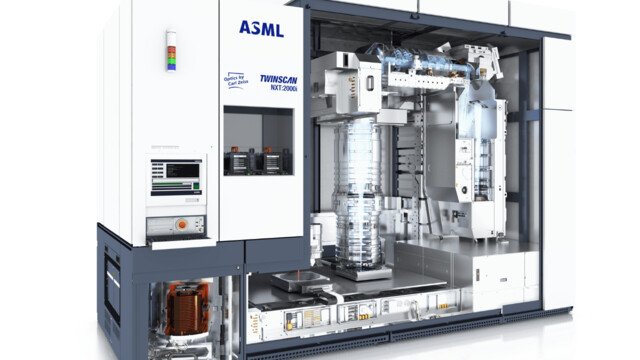
The Netherlands and semiconductor manufacturer ASML have opposed the proposed US restrictions on the export of semiconductor technologies to China. These measures are part of the so-called MATCH Act, which aims to limit China's access to advanced semiconductor technologies. The Dutch government has expressed concerns that such restrictions could have negative impacts on its own industry and global supply chains. ASML, as one of the leading manufacturers of lithography machines, plays a crucial role in semiconductor production. The company's machines are essential for chip manufacturing, particularly for advanced 5-nanometer and 3-nanometer processes.
The US government has pressured the Netherlands to ensure that ASML does not sell machines to Chinese companies involved in chip production. However, the Dutch government has emphasized that it must safeguard its own economic interests. A spokesperson for the Ministry of Economic Affairs stated that the US measures could not only strain relations with China but also jeopardize the competitiveness of the European semiconductor industry. The Netherlands is a key location for semiconductor production in Europe, and a restriction on exports could have significant economic consequences. The discussion surrounding the MATCH Act has also led to tensions within the NATO alliance.
Some member states fear that US policy could undermine collaboration in the technology sector. The Netherlands has historically advocated for an open trade and technology policy and views the current developments as a potential threat to these principles. ASML has already announced that it will not comply with US directives as long as they are not in line with international trade agreements. The company has emphasized that it will adhere to applicable laws but also sees the necessity to protect its own business interests. ASML's response could significantly influence the dynamics of the global semiconductor industry.
The US argues that the restrictions are necessary to ensure national security and to curb China's technological advancement. However, experts warn that such measures could also lead to increased rivalry between the US and China, which could destabilize the entire industry in the long run. Therefore, the Dutch government has called for a dialogue with the US to find a mutually agreeable solution. The impacts of the MATCH Act could be far-reaching, not only for ASML but also for other companies in the semiconductor sector. Analysts estimate that global semiconductor markets could reach a value of over $500 billion by 2026.
A restriction on access to technologies could significantly impair innovation and growth in this sector. The Dutch government plans to hold talks with US representatives in the coming weeks to clarify concerns and discuss possible compromises. A ministry spokesperson stated that the Netherlands is interested in a solution that considers both US security interests and Dutch economic interests. The discussions are expected to take place by the end of 2026. The debate surrounding the MATCH Act and the associated export restrictions is also likely to be addressed at upcoming international trade conferences.
The Dutch government has already announced that it will actively advocate for an open and fair trading environment. However, a specific date for the next trade conference has yet to be determined. ASML has generated over 20 billion euros in revenue in recent years, making it one of the largest players in the semiconductor industry. Developments surrounding the MATCH Act could significantly influence the company's future business prospects.






💬 Comments (0)
No comments yet. Be the first to comment!