


NASA Launches Name Campaign for Titan Mission
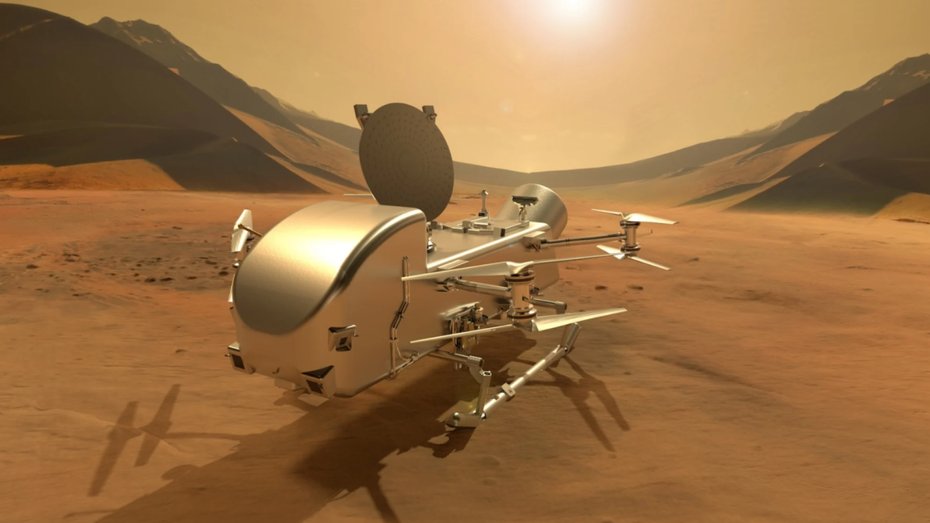
NASA has launched an innovative campaign to generate interest in its upcoming mission to Saturn's moon Titan. As part of this initiative, interested individuals can leave their names on a special helicopter drone that is set to reach Titan in 2034. This measure aims to promote public engagement with the mission and spark fascination for space exploration. The helicopter drone, named Dragonfly, will be used as part of NASA's mission to explore Titan. Titan is Saturn's largest moon and is known for its dense atmosphere and the presence of liquid methane lakes.
The mission will focus on investigating the chemical composition and geological activities on Titan to learn more about the possibility of life on other celestial bodies. The opportunity to immortalize one's name on the drone is offered through NASA's official website. Interested parties can submit their names until November 30, 2026. The names will be stored on a special chip that will fly aboard the Dragonfly drone.
This campaign is designed not only to increase public interest in the mission but also to create a personal connection to space research. The Dragonfly mission is part of NASA's New Frontiers Program, which aims to conduct innovative and cost-effective missions to explore the solar system. The mission is being realized with a budget of approximately $1 billion and includes several scientific instruments that will be used to analyze Titan's surface and atmosphere. The Dragonfly drone will be capable of flying autonomously and exploring various locations on Titan. The mission is expected to last several years, with the drone able to reach different regions of the moon and collect samples.
These samples will then be returned to Earth for analysis to expand scientific knowledge about Titan. NASA has already conducted several successful missions to other celestial bodies, including Mars rovers and the Voyager probes. The Dragonfly mission is considered one of the most ambitious, as it will be the first mission to deploy a flying robot on another moon. Scientists hope this mission will provide new insights into the origins of life and conditions on other planets. The Dragonfly drone will be equipped with a variety of instruments, including cameras, spectrometers, and chemical analyzers.
These devices will enable scientists to collect detailed data about Titan's surface features and chemical properties. The mission will also provide the opportunity to investigate geological processes on Titan that may be linked to the emergence of life. NASA plans to land the Dragonfly drone on Titan in 2034. The mission is regarded as a significant step in the exploration of the solar system and could provide crucial information about conditions on other celestial bodies. The chance to immortalize one's name on the drone offers the public the opportunity to be part of this historic mission.
NASA encourages all interested individuals to participate in this unique campaign and submit their names. Participation is free and offers an exciting way to connect with space research. The campaign is expected to appeal to many people interested in astronomy and the exploration of the universe. The Dragonfly mission will captivate not only the scientific community but also the general public. The opportunity to see one's name on an interplanetary spacecraft could further foster interest in science and technology.
NASA expects that the campaign will inspire many people to become enthusiastic about space exploration and actively participate in future missions. Name submissions can be made through NASA's official website, where additional information about the Dragonfly mission is also provided. NASA plans to store the names on a special chip that will fly with the Dragonfly drone. This initiative is part of NASA's efforts to promote public interest in space research and inspire the next generation of scientists and engineers. The Dragonfly mission is expected to launch in 2034 and could provide critical insights into the possibility of life on Titan.
NASA has already announced that the drone will be capable of flying autonomously and exploring various locations on Titan. The opportunity to immortalize one's name on the Dragonfly drone ends on November 30, 2026. Interested individuals should hurry to become part of this historic mission.




💬 Comentarii (0)
Inca nu exista comentarii. Fii primul!