


New Dwarf Planet Discovered Beyond Pluto
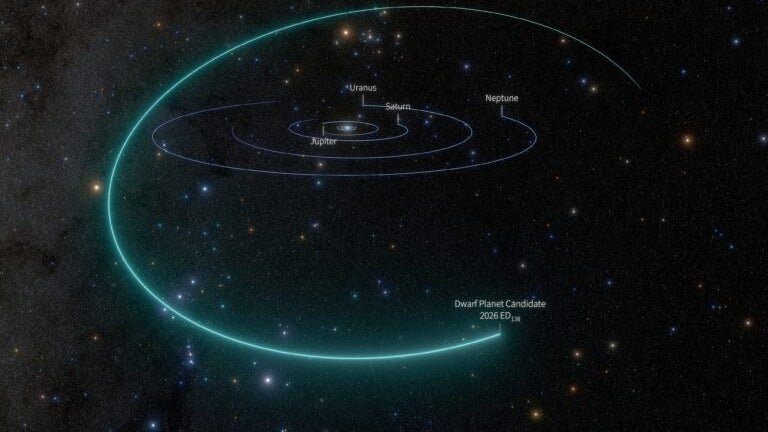
Researchers have discovered a potential new dwarf planet beyond Pluto, based on data from the Vera C. Rubin Observatory. The celestial body was identified using a specially developed algorithm capable of detecting subtle changes in telescope images. This discovery could significantly enhance the understanding of the Kuiper Belt and the celestial bodies within it. The images that led to the identification of the dwarf planet date back to 2016. However, at that time, the data had not been sufficiently analyzed to recognize the celestial body.
The new algorithm allows scientists to search the data more efficiently and identify potential objects that were previously overlooked. The Kuiper Belt, a region beyond Neptune's orbit, is home to numerous small celestial bodies, including dwarf planets. The discovery of a new dwarf planet could increase the number of known objects in this region and raise new questions about the formation and evolution of the solar system. Researchers at the Vera C. Rubin Observatory have emphasized that this discovery is significant not only for astronomy but also for understanding the dynamics of the Kuiper Belt. The algorithm that aided in the discovery could also be applied to other astronomical data to identify additional celestial bodies.
The analysis of telescope data is supported by the ongoing development of machine learning technologies. These technologies enable the recognition of patterns in large datasets that are difficult for the human eye to discern. The use of such algorithms could lead to further significant discoveries in the field of astronomy in the future. The researchers plan to continue utilizing data from the Vera C. Rubin Observatory to identify more potential dwarf planets and other objects in the Kuiper Belt. The observations are supported by the advanced technology of the observatory, which boasts one of the most powerful telescope facilities in the world.
The discovery of a new dwarf planet could also impact the classification of celestial bodies in the solar system. Scientists are already discussing whether the criteria for defining dwarf planets should be revised to better accommodate new discoveries. The results of this research are expected to be detailed in an upcoming scientific publication. The researchers hope that the discovery of the new dwarf planet will further increase interest in exploring the Kuiper Belt and its celestial bodies. The discovery was officially announced on October 29, 2026, and scientists are optimistic that further analyses will lead to new insights into the composition and dynamics of the Kuiper Belt.





💬 Comments (0)
No comments yet. Be the first to comment!