


Google's AI Chips Launched into Earth Orbit
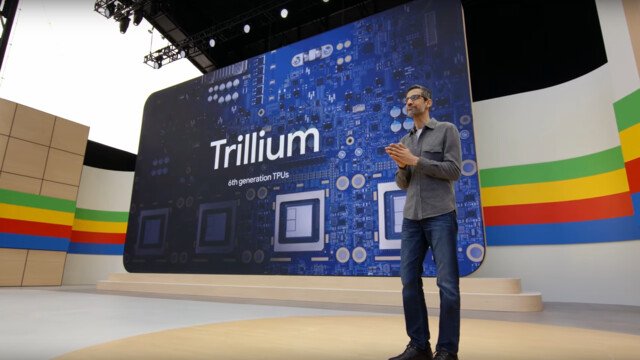
Google successfully launched a prototype for its Project Suncatcher into space on October 1, 2026. Onboard the spacecraft is TPU hardware designed to explore the possibilities of AI data centers in Earth orbit. This initiative could revolutionize the way data centers operate by leveraging the advantages of weightlessness and continuous solar energy. The launch took place in collaboration with NASA, which provided its expertise in aerospace engineering.
The prototype was carried into space by a SpaceX rocket and is now being tested in low Earth orbit. The mission is expected to last several months to gather data on the performance of the TPU hardware under space conditions. TPU stands for Tensor Processing Units, which are specifically optimized for machine learning and AI applications. Google plans to use the collected data to enhance the efficiency and performance of AI applications. The research could also help reduce the costs of operating data centers by decreasing the need for extensive cooling systems on Earth.
A central goal of Project Suncatcher is to optimize the energy supply of data centers through solar energy. In space, the conditions for utilizing solar energy are ideal, as sunlight reaches the hardware unobstructed. Google anticipates that the use of solar energy in combination with weightlessness can significantly increase the efficiency of data centers. The mission will also investigate the challenges associated with maintaining and operating data centers in space, including the effects of radiation on the hardware and the need to develop systems for long-term operation in space.
Google has already announced plans to develop additional prototypes following the completion of the testing phase. The idea of relocating data centers to space is not new, but it is gaining importance due to technological advancements and the growing interest in AI. Experts estimate that the demand for AI-driven applications will increase exponentially in the coming years. With this project, Google positions itself as a pioneer in exploring new technologies to support this demand. The first results of the mission are expected to be published in the first quarter of 2027.
Google plans to share insights from Project Suncatcher with other companies and research institutions to advance the development of AI technologies. Thus, the mission could be significant not only for Google but for the entire tech industry. The TPU hardware onboard the prototype is equipped with special sensors that allow for continuous performance monitoring. These sensors will collect data on temperature, energy consumption, and the overall functionality of the hardware. The collected information is intended to help further optimize the hardware for future missions in space.
The development of AI data centers in space could also have environmental implications. By relocating data centers to space, energy consumption on Earth could be reduced, potentially leading to a decrease in CO2 emissions. Google has committed to being climate-neutral by 2030 and sees this project as a step in that direction. The mission of Project Suncatcher represents a significant advancement in exploring new technologies for the future of AI. Google has already announced that it will use the results of the mission to develop the next generation of AI applications. The first data is expected in the first quarter of 2027.





💬 Comments (0)
No comments yet. Be the first to comment!