


Node.js Security Vulnerability Enables Remote Code Execution
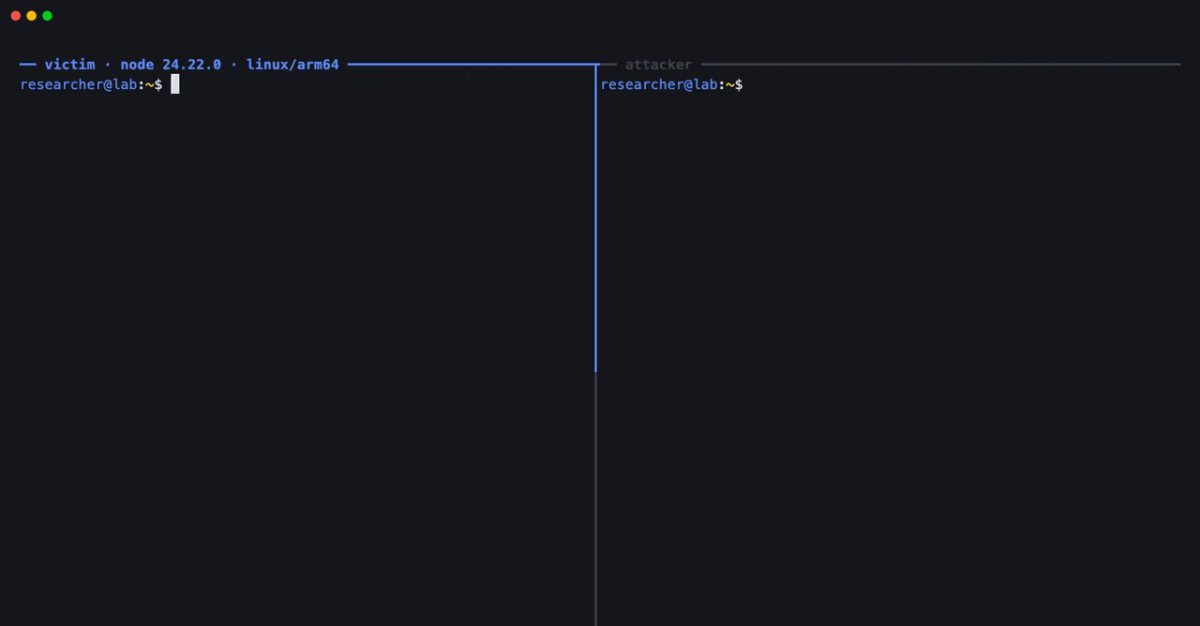
Security researchers from Imperva have identified a critical security vulnerability in Node.js that enables attackers to execute malicious code. The vulnerability, classified as CVE-2026-111497, affects the official version 24.22.0 of Node.js for Linux arm64. By using manipulated Brotli data, the researchers successfully demonstrated a Remote Code Execution (RCE) exploit. They conducted their proof of concept without a debugger or custom builds. Instead, the vulnerability was exploited by feeding specially crafted data into the built-in Brotli decoder.
This demonstrates that even official builds of Node.js are susceptible to attacks if not properly secured. Node.js has already disclosed the vulnerability publicly and recommends users to update their systems immediately. The vulnerability could potentially have far-reaching impacts on applications based on Node.js, especially in production environments where security is of utmost priority. The discovery of this vulnerability is part of a larger investigation by Imperva that focuses on the security of web applications and their dependencies. The researchers emphasized that using standard libraries like Brotli in Node.js is not without risk, particularly if they are not regularly checked for security vulnerabilities.
The implications of this security vulnerability could be significant, as Node.js is widely used in many modern web applications. Developers and companies using Node.js are urged to review their security practices and ensure they apply the latest updates and patches. Imperva also pointed out that the vulnerability is not merely theoretical. The ability to execute malicious code could allow attackers to access sensitive data or even take control of affected systems. This poses a serious risk to the integrity and confidentiality of data.
The vulnerability was discovered in version 24.22.0 of Node.js, which was released on September 15, 2026. Users should ensure they update to the latest version to protect against potential attacks. In addition to the update recommendations, Node.js has also published guidelines for the secure implementation of Brotli decoding in applications. These guidelines are intended to help developers minimize potential attack vectors and enhance the security of their applications.
The discovery of this vulnerability underscores the need to prioritize security practices in software development. Developers should be aware of the risks associated with using third-party libraries and take appropriate measures to protect their applications. The researchers from Imperva have emphasized that software security is an ongoing process that requires regular reviews and updates. The discovery of CVE-2026-111497 is an example of how important it is to proactively identify and address security vulnerabilities.
The Node.js community is urged to follow security policies and ensure that all dependencies are regularly checked for security vulnerabilities. This is crucial to maintaining the integrity and security of applications. The security vulnerability CVE-2026-111497 was officially disclosed by Node.js on October 25, 2026.


💬 Comments (0)
No comments yet. Be the first to comment!