


New Approach to Dark Matter through Dark Photons
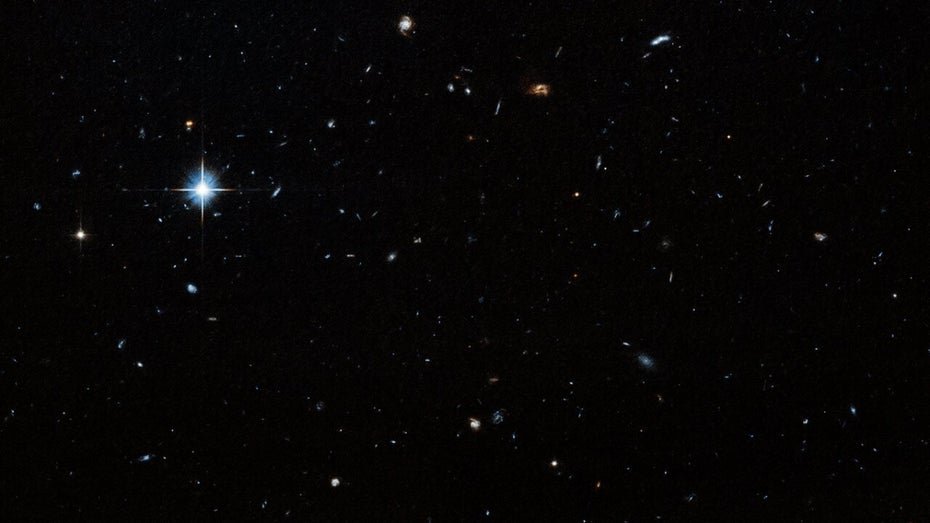
Scientists have developed a new explanatory approach to dark matter that questions existing theories about the early cosmos. Recent calculations indicate that the processes in the universe following the Big Bang did not align with previous models. These findings could have far-reaching implications for the understanding of dark matter, which constitutes about 27% of the total matter in the universe. Traditionally, it has been assumed that dark matter consists of invisible particles that can be detected through their gravitational interactions with visible matter. The new approach, which relies on the existence of dark photons, could revolutionize this assumption.
Dark photons are hypothetical particles associated with dark matter and may exhibit different interactions with normal matter. Researchers have conducted calculations suggesting that dark photons could have played a crucial role in the early universe. These particles might behave differently than known photons, leading to a changed structure of dark matter. The new models suggest that the interactions between dark matter and normal matter are more complex than previously thought. A central finding of the new calculations is that the distribution of dark matter in the early universe may not have been homogeneous.
Instead, there could have been regions where dark photons exhibited a higher density. This insight could explain why the observed distribution of galaxies in the universe does not match previous models. Scientists emphasize that the discovery of dark photons could not only influence theories about dark matter but also reshape the entire understanding of cosmology. The new models could help address some of the unresolved questions regarding the structure and evolution of the universe. In particular, the role of dark photons in the formation of galaxies and other cosmic structures may need to be reevaluated.
Research on dark photons is still in its early stages, and further experiments are needed to validate the hypotheses. Scientists are working on various experiments to detect the existence of these particles. This includes both terrestrial experiments and space observations aimed at investigating the properties of dark photons. The results of these studies could not only expand the understanding of dark matter but also inspire new technologies and methods for exploring the universe.
The discovery of dark photons could also impact the development of new theories in particle physics that go beyond current models. Researchers are optimistic that the coming years will bring significant advancements in the study of dark photons. The next steps in the research include developing more precise detectors and conducting experiments aimed at measuring the properties of these hypothetical particles. A concrete goal is to provide initial experimental evidence by 2028.






💬 Comments (0)
No comments yet. Be the first to comment!