


Moon Dust as a Food Source for Future Lunar Bases
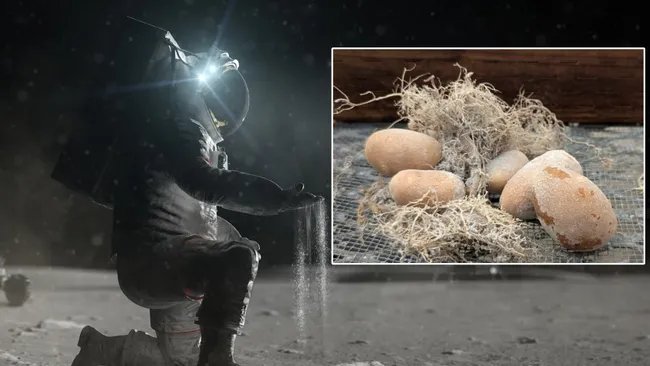
Scientists have investigated the possibilities of growing potatoes from lunar dust in a recent study to ensure food supply for future lunar bases. Given the challenges associated with supplying inhabited stations in space, cultivating plants on-site could represent a sustainable solution. While the lunar surface offers ample loose rock, it lacks essential nutrients required for crop growth. The study emphasizes that the lunar surface is primarily composed of regolith, a material rich in silicates but poor in organic matter and essential nutrients such as nitrogen, phosphorus, and potassium. These elements are crucial for plant growth and must be added either through chemical fertilizers or other innovative methods.
Researchers are working on techniques to extract these nutrients from lunar rock or transport them from Earth. Another aspect of the study addresses the adaptability of potatoes to extreme environmental conditions. Potatoes are known for their robustness and can thrive in various climates. The researchers are exploring how these plants can be genetically modified to withstand the harsh conditions on the Moon, including high radiation and extreme temperature fluctuations. Additionally, the role of hydroponics and aeroponics in lunar agriculture is being considered.
These cultivation methods could enable plants to be grown without soil, reducing the need to process large amounts of lunar regolith. Hydroponic systems could operate using water and nutrients from recycled waste, increasing the efficiency of food production. The researchers emphasize that developing a functioning agriculture system on the Moon is not only crucial for the food supply of astronauts but also for the long-term colonization of the Moon. The ability to grow food on-site could significantly reduce dependence on resupply missions from Earth and improve the quality of life for residents. A central goal of the study is to test the feasibility of potato cultivation in lunar regolith by 2030.
The researchers plan to conduct initial experiments in simulated lunar environments to observe the plants' reactions to specific conditions. These tests aim to provide important data relevant to future missions and the development of lunar bases. The results of this research could also impact agriculture on Earth. Techniques developed to adapt plants to extreme conditions could be applied in agriculture to combat climate change and food scarcity. The findings could help breed more resilient plants that can thrive in less fertile soils.
The study is supported by NASA and several universities specializing in space technology and agricultural sciences. Collaboration between various disciplines is crucial to addressing the challenges of lunar agriculture. The researchers hope that their results will be beneficial not only for lunar research but also for the development of sustainable agricultural practices on Earth. The first tests for planting potatoes in lunar regolith are planned for 2028 to lay the groundwork for future lunar missions.






💬 Comments (0)
No comments yet. Be the first to comment!