


Flying Robot Lands on Sunflower
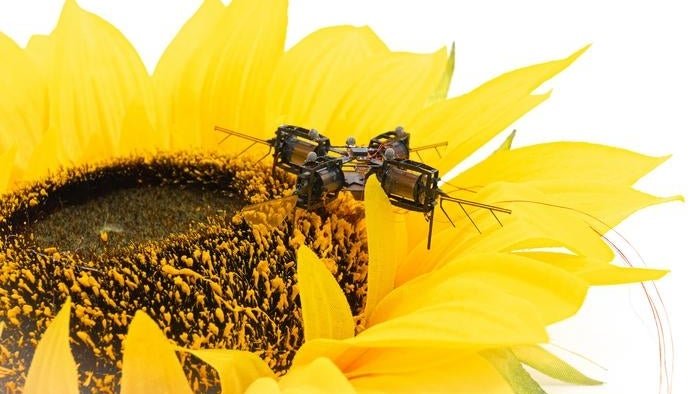
A newly developed flying robot, lighter than a large paperclip, has the ability to autonomously land on a sunflower. This innovation could revolutionize the use of flying machines in miniature format, as they are no longer reliant on external cameras to perceive their surroundings. Traditionally, flying robots of this size depended on specialized test environments where they could navigate using external cameras. However, the integration of onboard electronics for orientation led to heavier designs, making takeoff more difficult. The new flying robot circumvents this issue through an innovative design that is both lightweight and functional.
The development of the robot is based on advanced technologies that allow for the necessary electronics to be housed within a minimal weight. This has been achieved through the use of novel materials and an optimized construction method. Engineers have managed to integrate the electronics in such a way that it does not significantly increase the overall weight of the robot. Another crucial factor for the robot's success is the improved software, which enables precise control and navigation. This software utilizes algorithms specifically designed for recognizing and interacting with natural surfaces.
As a result, the robot can not only fly but also land safely and move across various plant surfaces. Tests of the robot have shown that it is capable of landing on different plants without causing damage. This opens up new possibilities for applications in agriculture, where such robots could be used for monitoring plants or conducting targeted treatments. The ability to land on delicate surfaces is a significant advantage over conventional drones. Researchers plan to test the robot in various environments to further evaluate its versatility and robustness.
Initial tests in controlled environments have already yielded promising results. The next steps include field trials to verify performance under real-world conditions. The development of the flying robot could also impact research in the fields of robotics and artificial intelligence. The techniques used to enhance navigation and control could be transferred to other robot models. This could lead to broader applications of miniature robots in various areas, from environmental monitoring to medical care.
A team of scientists has already expressed interest in further developing this technology. They see potential in combining flying robots with other technologies to find new solutions to existing problems. Researchers are optimistic that these developments will find practical applications in the near future. The next phase of development will focus on improving the robot's energy efficiency. Currently, the robot is powered by a special battery that allows for limited flight time.
The goal is to extend flight time through more efficient energy sources to broaden its usability. Researchers are working on integrating solar cells to optimize the power supply. The first prototypes of the robot have already been successfully tested, and developers plan to make the technology available for commercial applications by the end of 2026. Advances in robotics and materials science could soon lead to the deployment of such flying robots in agriculture and other fields.








💬 Comments (0)
No comments yet. Be the first to comment!