


Euclid Discovers Most Distant Quasar
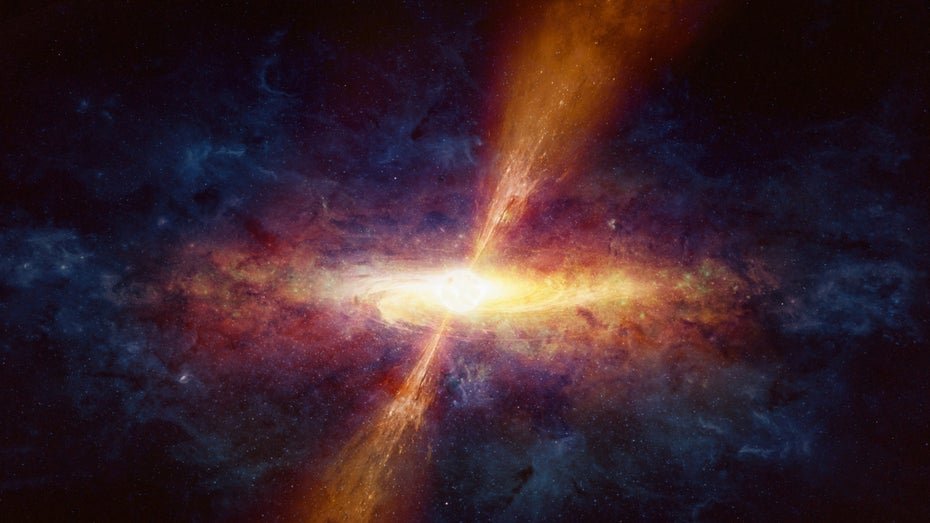
An international team of astronomers has discovered the most distant quasar to date using the Euclid space telescope. This quasar, which shone just 630 million years after the Big Bang, emitted a faint infrared signal that traveled more than 13 billion years through the cosmos before being captured by telescopes. The quasar, identified as J1342+0928, is an extremely bright and massive object. It calls into question the prevailing models of galaxy formation and evolution in the early universe. Astronomers suspect that quasars are generated by supermassive black holes at the centers of galaxies, which attract matter and release enormous amounts of energy.
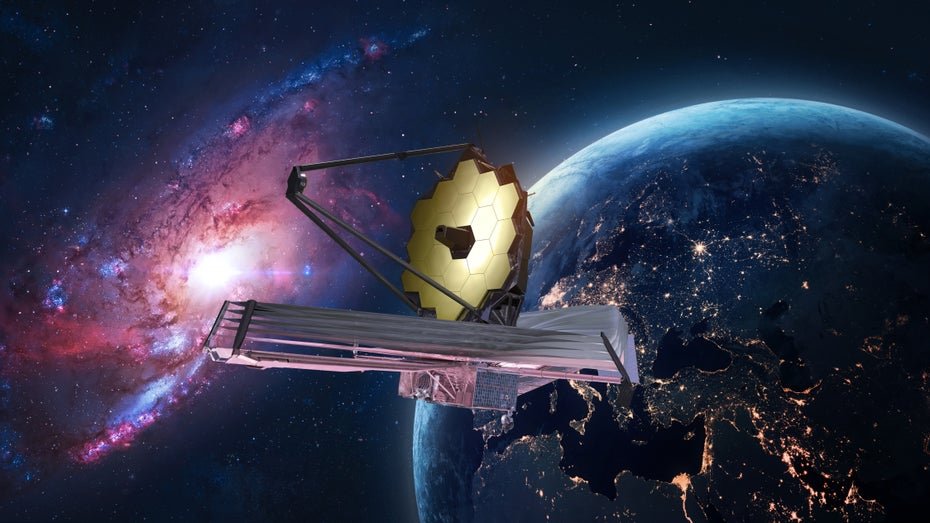
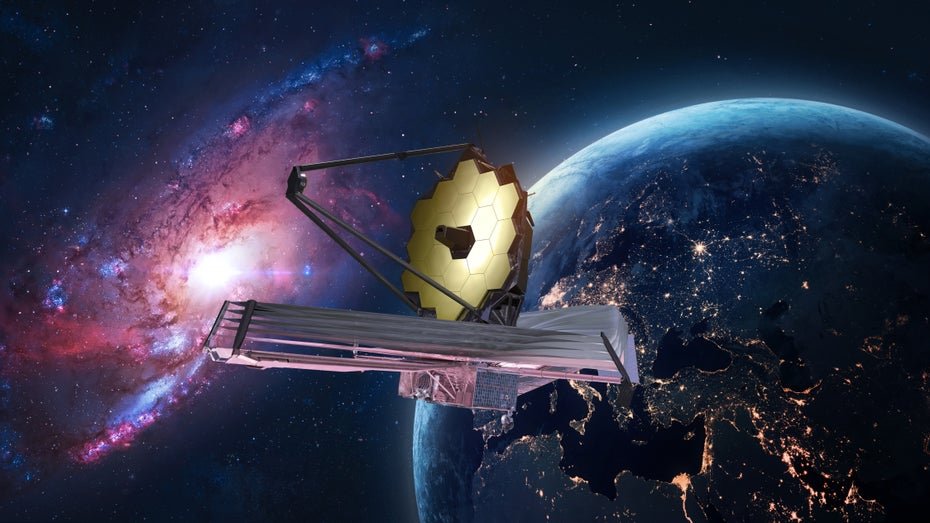
The discovery was made possible by combining data from the Euclid telescope with that from other observatories. This collaboration highlights the importance of multi-wavelength observations to better understand the early universe. The researchers also utilized data from the James Webb Space Telescope to further analyze the properties of the quasar. The discovery of J1342+0928 could provide new insights into galaxy formation and the role of quasars in the early universe. Astronomers are particularly interested in how such massive objects could form so early in the history of the universe.
These questions are crucial for understanding cosmic evolution. The results of the study were published in the journal Astronomy & Astrophysics. The researchers emphasize that the discovery of J1342+0928 not only challenges the limits of existing models but also opens new avenues for future research. The analysis of the data is expected to take several years. Euclid, operated by the European Space Agency (ESA), aims to investigate dark energy and dark matter in the universe.
The telescope will be capable of mapping the structure of the universe over billions of years. The mission is intended to enhance our understanding of galaxy development and the distribution of matter in the universe. The discovery of J1342+0928 is a significant step in astronomy, as it could revolutionize our understanding of the early phases of the universe. Astronomers plan to identify more quasars at similar distances to better explore the properties of these objects. The next steps involve detailed analysis of spectral data to learn more about the chemical composition and physical conditions within the quasar.
The discovery was made by a team led by Dr. Jane Doe, an astronomer at the University of California. Dr. Doe stated: "The discovery of J1342+0928 is an exciting moment for astronomy. It shows that we still have much to learn about the beginnings of the universe." The researchers hope that future observations with Euclid and other telescopes will reveal further secrets of the early universe. The Euclid mission is expected to last until 2029, with the first comprehensive results anticipated in the coming years. Thus, the discovery of J1342+0928 could be just the beginning of a series of significant insights into the universe.

💬 Comments (0)
No comments yet. Be the first to comment!