


Ermis-3: First Laser Data Transmission of a Small Satellite
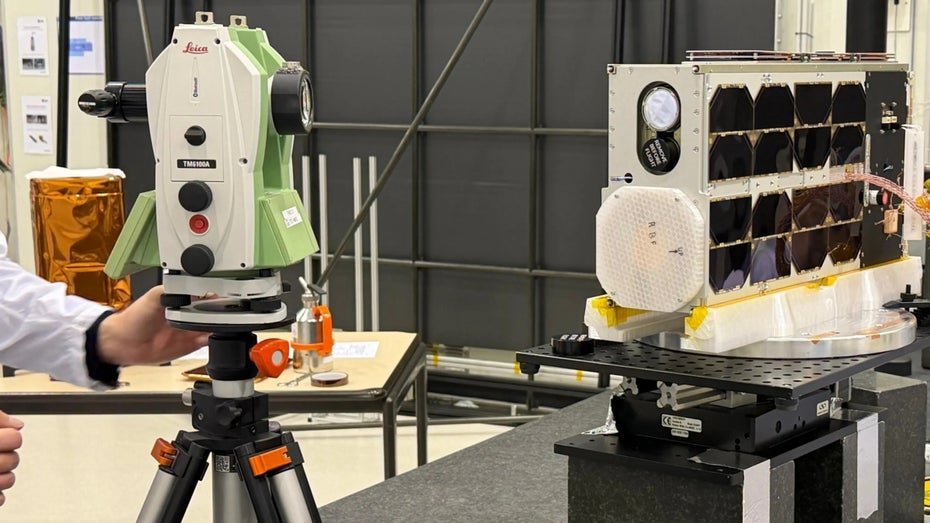
A Greek small satellite, known as Ermis-3, has successfully established a laser connection to a ground station. This connection was tested as part of a project funded by the European Space Agency (ESA). The successful test represents a significant advancement in satellite communication, as laser technology enables data rates that are significantly higher than conventional radio connections. The laser technology employed by Ermis-3 could greatly enhance data transmission speeds. While traditional radio connections are often affected by atmospheric disturbances, laser communication offers a more stable and faster alternative.
This could be particularly important for applications in Earth observation and telecommunications. Ermis-3 was developed by the Greek space agency and the University of Thessaloniki. The satellite is part of a larger program aimed at exploring new technologies in space. The development and testing of the laser connection are part of efforts to improve the efficiency and capacity of satellite communication systems. The first successful data transmission over the laser connection took place on November 1, 2026. During this transmission, data was sent at speeds of up to 1 Gbit/s. This speed significantly surpasses most current radio connections and could revolutionize the way satellites send and receive data. Another advantage of laser technology is the ability to transmit larger amounts of data in a shorter time. This is especially important for applications that require real-time data, such as weather forecasting or emergency communication.
The ability to quickly transmit large amounts of data could also enhance the efficiency of satellite missions. However, laser technology also presents challenges. The connection is more susceptible to atmospheric disturbances, which could affect the reliability of communication. Researchers are already working on solutions to minimize these issues and further optimize the technology. The ESA views the successful testing phase of Ermis-3 as an important step towards future satellite missions.
The organization plans to integrate the insights gained into future projects to further expand the possibilities of satellite communication. This could ultimately lead to an improvement in global communication infrastructure. The development of Ermis-3 and the successful data transmission are part of a larger trend in space exploration focused on enhancing communication systems. The combination of laser technology and satellite communication could enable new applications and services that were previously unfeasible. The next steps for the Ermis-3 project include further testing of the laser connection and analysis of the collected data. Researchers hope that the results of these tests will help optimize the technology for broader use in space exploration. The ESA plans to publish the results by the end of 2026.





💬 Comments (0)
No comments yet. Be the first to comment!