


Brotli Decoder Security Vulnerability Affects Multiple Software
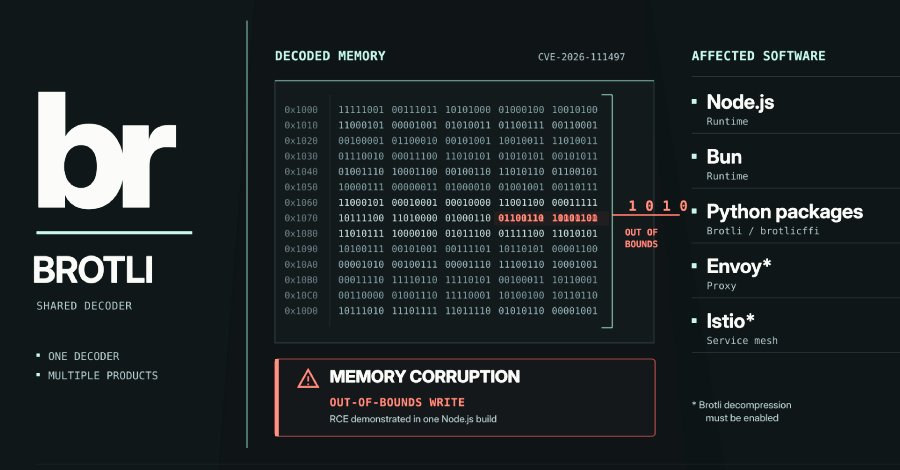
A memory corruption vulnerability in Google's Brotli decoder has been discovered, affecting several widely used software applications. This security flaw, identified by the CVE number CVE-2026-111497, allows attackers to use specially crafted compressed data to write beyond the end of a buffer, thereby corrupting a program's memory. Affected software includes Node.js, Bun, Microsoft's .NET platform, as well as the Python packages Brotli and brotlicffi. Envoy proxies configured to decompress Brotli data are also vulnerable. The vulnerability could potentially lead to Remote Code Execution (RCE), posing significant risks to the affected systems.
The flaw was identified through the analysis of the Brotli decoder, which is used in many applications for data decompression. The ability to overwrite memory could allow attackers to execute malicious code, potentially leading to a complete compromise of the system. Security researchers warn that exploitation of this vulnerability has already been observed in the wild. Developers and system administrators are strongly urged to review their systems and apply updates as necessary to mitigate the security vulnerability. Affected software vendors have already begun developing patches to address the issue.
Microsoft has announced that an update for the .NET platform will be made available in the coming weeks. The discovery of this security vulnerability raises further questions about the security of widely used software libraries. The use of third-party libraries that are not regularly maintained can lead to significant security risks. Experts recommend regularly reviewing and updating dependencies in software projects. The vulnerability affects not only developers but also end users who rely on software utilizing these libraries.
A successful attack could result in the theft of personal data or systems being exploited for further attacks. The IT security community is closely monitoring the situation and advises increased vigilance. The vulnerability was discovered last week by a team of security researchers and promptly reported to the affected companies. The response of software vendors to this discovery will be crucial in maintaining user trust in the security of their products. Initial patches are expected to be released by the end of November 2026.
The CVE number CVE-2026-111497 is part of a growing list of security vulnerabilities discovered in recent months. The IT security industry faces a constant race against time to identify and address new threats. The need for robust security practices and regular updates is becoming increasingly urgent. The vulnerability also impacts the open-source community, which heavily relies on the integrity of libraries. Developers dependent on these libraries must ensure they are using the latest versions and implementing security updates promptly.
The community has already begun intensifying discussions about the security of open-source projects. The discovery of this security vulnerability underscores the importance of security reviews in software development. Companies are called upon to integrate security practices into their development processes to avoid similar issues in the future. The relevance of security analyses and penetration testing is increasingly recognized in the industry. This vulnerability is considered one of the most significant discoveries of 2026, as it affects a wide range of software products and potentially has far-reaching implications for IT security.
The exact number of affected systems is currently unknown; however, it is estimated that millions of users may be at risk. The vulnerability was made public on October 20, 2026, and initial reports of potential exploitations have already been received. The IT security community is working diligently to assess the impact of this vulnerability and take appropriate measures.


💬 Comments (0)
No comments yet. Be the first to comment!