


Solar System in the Safe Space of the Milky Way
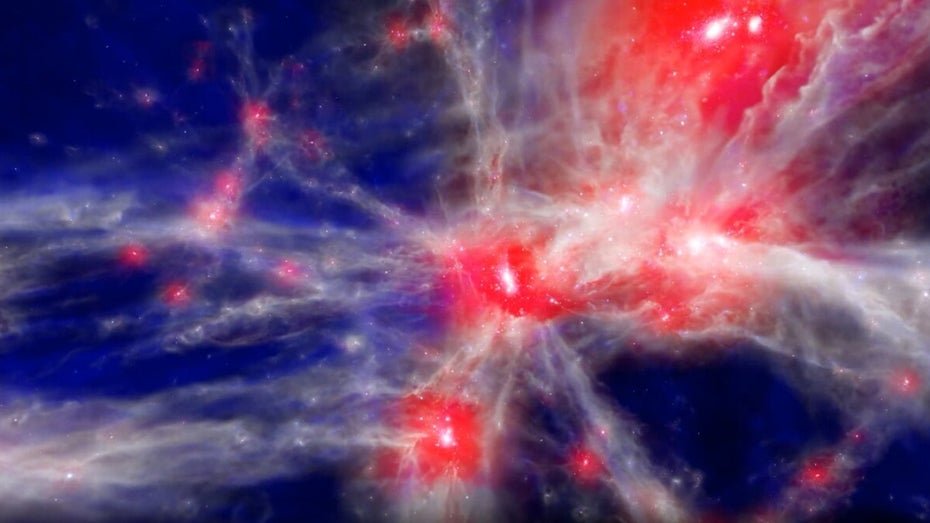
A recent astrophysical simulation has revealed that our solar system represents one of the safest positions for biological life within the Milky Way. This finding could have far-reaching implications for the search for extraterrestrial life. The study analyzed various factors that influence the viability of life forms in the universe. The simulation took into account the frequency of supernova explosions, proximity to massive objects, and radiation from neighboring stars. These parameters are crucial as they determine the likelihood of catastrophic events that could threaten life on planets.
The results indicate that our solar system is relatively far from dangerous regions. A key finding of the study is that the position of the solar system in the Orion Arm of the Milky Way protects it from most potential threats. The simulation showed that the probability of being affected by a supernova in the next 100 million years is only 0.1%. This represents a significant difference compared to other regions of the galaxy, where such events occur more frequently. Additionally, it was found that the stability of the orbits of the planets in the solar system plays an important role.
The simulation demonstrates that the gravitational interactions between the planets help maintain stable orbits, thereby minimizing the risk of collisions or other catastrophic events. This stability could favor the long-term development and preservation of life. The researchers emphasize that the results are significant not only for Earth but also for the search for life on other planets. Planets located in similar positions to Earth could also benefit from comparable safety advantages. This could significantly influence the criteria for selecting exoplanets to be investigated for signs of life.
Another aspect of the study is the analysis of radiation emitted by neighboring stars. The simulation revealed that our solar system is situated in a region with relatively low radiation, which favors conditions for the development of life. In regions with high radiation, life forms could be exposed to significant risks that hinder their development. The results of this simulation could also impact astrobiology, as they open new perspectives on the distribution of life in the universe. Scientists could specifically search for planets that exist in environments similar to our solar system.
This could enhance the efficiency of the search for extraterrestrial life. The study was conducted by an international team of astrophysicists and published in a renowned scientific journal. The researchers hope that their findings will lead to a better understanding of the conditions necessary for the emergence and preservation of life. The simulation could also serve as a foundation for future research addressing the safety of habitats in the universe. The simulation was conducted using state-of-the-art computational methods that allow for the modeling of complex astrophysical processes.
The algorithms used take into account a variety of variables that can influence the survival of life forms. This methodology could also be applied to other astrophysical questions. The study highlights that the position of the solar system is significant not only for Earth but also for all of humanity. The insights could help improve our understanding of the long-term future of humanity in the context of the universe. The researchers plan to present their findings at international conferences to promote discussion about the safety of habitats in the universe.
The simulation and its associated findings could also influence public perception of astrobiology. A better understanding of the conditions necessary for the emergence of life could increase interest in space exploration and the search for extraterrestrial life. The study was published on October 5, 2026.






💬 Comentarii (0)
Inca nu exista comentarii. Fii primul!