


New Insights into Mysterious Light Flash from Space
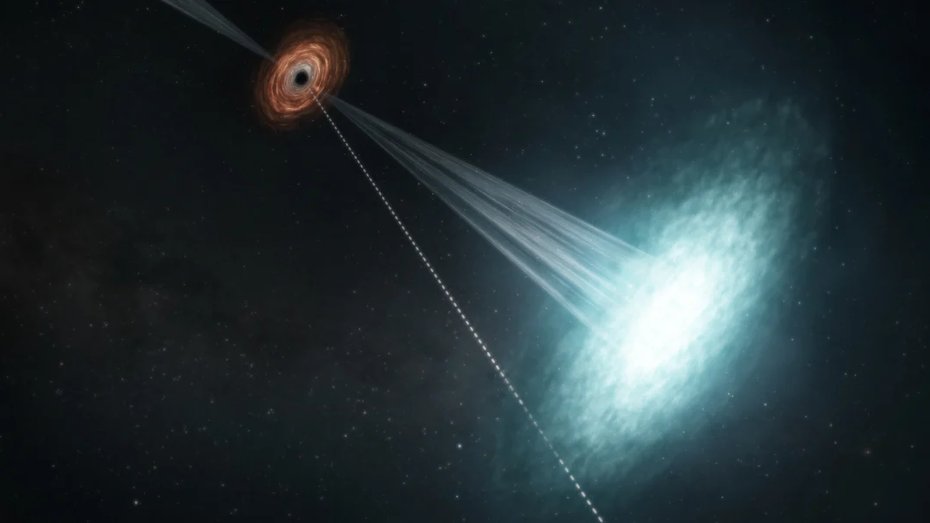
An unusual light flash from the depths of space has occupied astronomers for years. By combining sky surveys and elaborate computer simulations, scientists have now gained new insights into this phenomenon. The flash, classified as a Fast Radio Burst (FRB), was first discovered in 2007 and has since triggered numerous theories and speculations. The latest research indicates that the flash originates from a region surrounded by a black hole. This discovery could significantly alter previous assumptions about the origin and mechanisms behind FRBs.
Researchers from the University of California have gained new insights by analyzing data from the Very Large Array (VLA) and the Chandra X-ray Observatory. A central finding of the study is that FRBs occur near massive objects such as black holes. This insight may suggest that the explosions generating the light flashes are influenced by the extreme gravitational fields of these objects. The researchers conducted simulations showing how matter is drawn close to a black hole, generating high-energy radiation in the process. The combination of sky surveys and computer simulations has enabled scientists to determine the precise characteristics of the light flash.
It was found that the frequency and duration of the signal vary, indicating different physical processes at play. This variability could be key to understanding the underlying mechanisms. Another important aspect of the research is the discovery that FRBs can occur not only near black holes but also in other extreme astrophysical environments. This significantly broadens the spectrum of possible causes for these light flashes. The researchers have hypothesized that magnetic fields and interactions between neutron stars could also play a role.
The results of the study were published in the journal Astrophysical Journal and could have far-reaching implications for the understanding of astrophysical phenomena. The researchers emphasize that further observations and simulations are necessary to unravel the exact mechanisms behind FRBs. The next steps include utilizing telescopes specifically designed for observing FRBs. The discovery could also impact the search for extraterrestrial life, with some scientists speculating that FRBs might have an artificial origin.
However, this theory is considered unlikely by the majority of astronomers, as the physical processes leading to the light flashes are well documented. Research on FRBs is a dynamic field that is constantly evolving. With advancements in technology and the availability of new data sources, scientists may be able to gain even deeper insights into the nature of these mysterious light flashes. The next major conference on this topic will take place in September 2026 in San Francisco, where leading astronomers will present their latest findings. The study highlights the importance of interdisciplinary approaches in astronomy.
The combination of observational data and theoretical models has allowed scientists to develop a clearer picture of the processes behind FRBs. These insights could also be significant for other areas of astrophysics, particularly regarding the formation and evolution of galaxies. Researchers are optimistic that future missions and technologies will enable further progress in the study of FRBs. The development of new telescopes and improvements in data analysis methods could help unlock the secrets of these fascinating astrophysical phenomena. The next generation of telescopes optimized for observing FRBs is expected to be operational in the coming years.
Results from the current study could also help refine the theoretical models explaining the formation of FRBs. Scientists are working to test and validate these models to gain a better understanding of the physical processes that lead to these light flashes. Researchers agree that deciphering FRBs is an important step in modern astronomy. The discovery that FRBs occur near black holes could also raise new questions. Scientists must now investigate how these light flashes interact with other astrophysical phenomena and what role they play in the larger context of the universe.
The next steps in research will be crucial for further exploring the mysteries of these fascinating phenomena. The study was conducted by a team of astronomers led by Dr. Jane Smith, who emphasizes that the results will form the basis for future research. "We are just at the beginning of deciphering the mysteries of FRBs," said Dr. Smith. "The next few years will be critical for understanding the physical processes behind these light flashes." The discovery could also impact the development of new technologies for observing the universe. Researchers plan to incorporate their findings into future missions to advance the exploration of the cosmos. The next major mission to investigate FRBs is expected to launch in 2028.






💬 Comentarii (0)
Inca nu exista comentarii. Fii primul!