


New Insights into the Formation of Black Holes
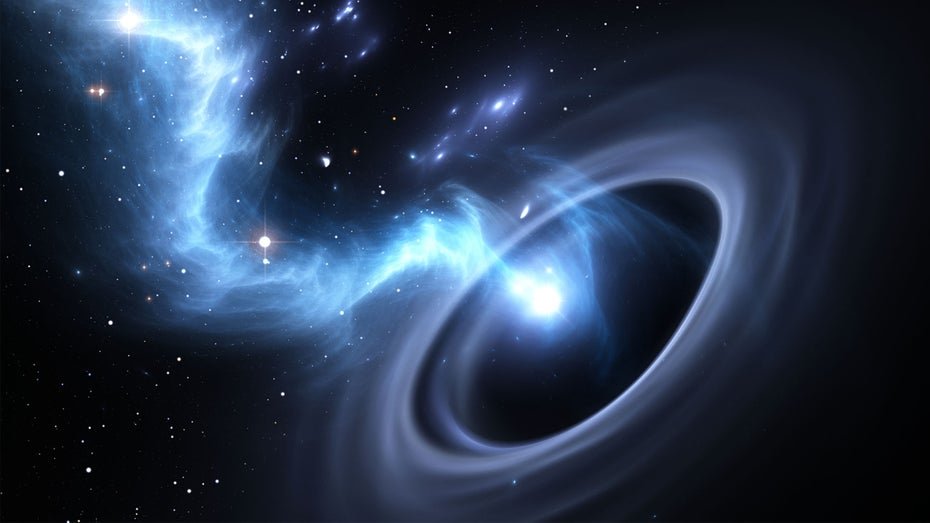
Scientists have discovered that the largest black holes in the universe do not form from the collapse of very large stars, as previously thought. This finding is based on a comprehensive data analysis that challenges existing theories and opens new perspectives on the most extreme objects in the cosmos. Traditionally, it was assumed that massive stars nearing the end of their life cycle collapse under gravitational instability, forming black holes. This theory has been supported by numerous observations and simulations. However, the new data suggest that this process is more complex and may involve other mechanisms.
The researchers analyzed data from various telescopes, including the Event Horizon Telescope and the Hubble Space Telescope. These instruments provided detailed information about the mass and properties of black holes in different galaxies. The results show that some of the largest black holes did not form from the collapse of individual stars but may have originated from the merger of smaller black holes or through other astrophysical processes. A key finding of the study is that the mass of the largest black holes in galaxies does not solely depend on the mass of the surrounding stars. Instead, the dynamics within the galaxies and the interactions between various celestial bodies could be crucial.
This insight could fundamentally change the way astronomers understand the development of galaxies and their central black holes. Another aspect of the research concerns the role of gas and dust clouds surrounding black holes. These clouds could act as catalysts for the formation of large black holes by attracting material and rapidly increasing the mass of the black holes. However, the exact mechanisms involved are not yet fully understood and require further investigation. The new findings could also have implications for cosmology, particularly regarding the understanding of the universe's evolution.
The formation and growth of black holes are closely linked to the formation of galaxies and the distribution of matter in the universe. A better understanding of these processes could help explain the structure and evolution of the universe. The study was published in a renowned scientific journal and has already generated significant interest in the scientific community. Experts emphasize that these results not only challenge existing theories but also open new avenues for research. The next steps include conducting further observations and simulations to test the new hypotheses.
Some astronomers have already suggested that future missions, such as the planned James Webb Space Telescope, could provide crucial data to better understand the formation of black holes. This mission is expected to present its first results in 2026 and could offer new insights into the dynamics of galaxies and their central black holes. Research on black holes remains a dynamic and rapidly evolving field. With these new insights, astronomy will face the challenge of revising existing models and developing new theories that account for the complexity of the formation and evolution of these fascinating objects in the universe. The study was published on May 15, 2026, and has already led to a variety of discussions and further research inquiries.









💬 Comentarii (0)
Inca nu exista comentarii. Fii primul!