


API-Driven Malware Distribution Discovered by ClickFix
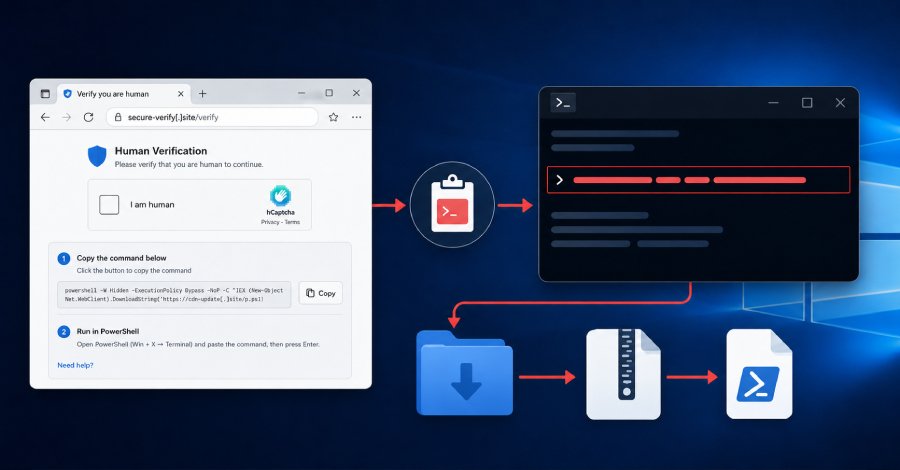
A recent research report has closely examined the distribution of malware by ClickFix, a system that tricks users into manually executing malicious software. The analysis of 3,000 live payloads shows that the malicious commands behind the fake "Prove you are human" pages are now distributed by API-driven servers. These servers deliver the same malware to every visitor, albeit in different disguises. The study highlights that ClickFix is not just a simple method for malware distribution, but has also evolved. The new mechanisms allow the malware to be crafted in a way that makes it harder for security software to detect.
A newly discovered delivery method has been specifically designed to bypass Windows script verification, increasing the effectiveness of the malware. A central element of the ClickFix strategy is the use of API servers that provide a variety of malware variants. These servers can dynamically modify the malware, making each delivery appear unique. This significantly complicates identification and blocking by security solutions. Researchers have found that the malware is distributed through various channels, including fake websites and phishing emails.
Users are often lured by deceptively realistic prompts to enter personal data or confirm their identity. These tactics are designed to gain users' trust and lead them to unknowingly download the malware. Another concerning aspect is the malware's ability to self-update. Once installed on a system, it can retrieve new commands from the API servers, allowing attackers to maintain control over the infected systems. This functionality poses a significant threat to cybersecurity, as it makes the malware adaptable and difficult to remove.
Research has also shown that the malware can integrate itself into legitimate software to obscure its detection. This technique, known as code injection, allows the malware to masquerade as a harmless application while executing harmful activities in the background. This presents an additional challenge for security researchers and IT administrators. The implications of this discovery are far-reaching. Companies and individuals must rethink and strengthen their security measures to defend against these new threats.
The researchers recommend that users regularly check their systems for suspicious activities and ensure that their security software is up to date. The study was conducted by a team of cybersecurity experts specializing in malware analysis and distribution. The findings were published in a journal focusing on current trends in cybersecurity. The researchers emphasize the urgency of taking these threats seriously and taking proactive measures. The complete study is expected to be published in August 2026, which could provide further insights into the workings of ClickFix and similar malware distribution techniques.




💬 Comentarii (0)
Inca nu exista comentarii. Fii primul!