


Voyager 2: 21 Billion Kilometers Away and Still Active
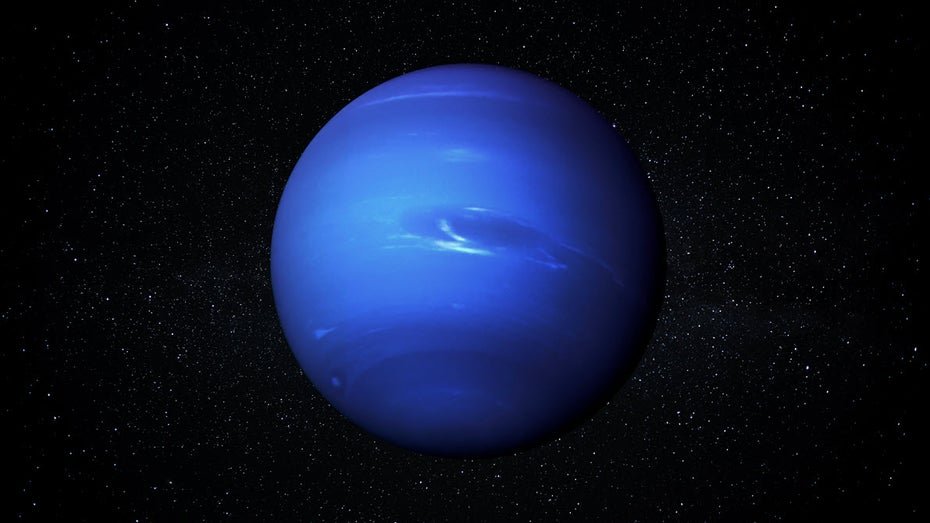
The Voyager 2 spacecraft, which has been traveling through space since 1977, has reached a distance of 21 billion kilometers from Earth. Despite this enormous distance, it continues to provide valuable data that expands our understanding of the outer solar system. The mission, originally launched to explore the planets Jupiter and Saturn, has evolved into one of the longest and most successful space missions in history. Particularly noteworthy are the images that Voyager 2 captured over 37 years ago of Neptune's moon Triton. These images have not only sparked the interest of scientists but have also challenged many existing theories about the outer planets and their moons.
Triton, Neptune's largest moon, exhibits a variety of geological features indicative of active geology. The discoveries made by Voyager 2 have shaped the perception of Triton as one of the most fascinating celestial bodies in the solar system. The images show, among other things, large geysers that eject nitrogen gas into the atmosphere, suggesting the possibility of an underground ocean. These findings have reignited interest in future missions to explore Triton and other celestial bodies in the Kuiper Belt. The spacecraft has also collected data on Neptune's magnetic fields and atmosphere.
This information has contributed to a deeper understanding of the dynamic weather phenomena on the planet. Neptune is known for its extreme winds, which can reach speeds of up to 2,100 km/h, making it one of the stormiest planets in the solar system. Currently, Voyager 2 is in interstellar space and continues to send data back to Earth. Communication occurs via the Deep Space Network, which enables signals to be received over vast distances. Scientists are analyzing the collected data to learn more about conditions in interstellar space, including the interactions between the solar wind and the interstellar medium.
The mission of Voyager 2 is expected to continue at least until 2027, as long as the spacecraft's power supply remains sufficient. Scientists have already made plans for analyzing upcoming data, which could provide new insights into the structure and properties of interstellar space. The spacecraft has already spent more than 45 years in space and stands as a symbol of human exploration. The successes of Voyager 2 also have implications for future space missions. The data and experiences gathered will inform the planning of new missions aimed at further exploring the outer planets and their moons.
NASA has already expressed interest in a potential mission to Triton to investigate the moon's geological activities and atmosphere more closely. The Voyager 2 spacecraft remains a fascinating example of the possibilities of space exploration and the discovery of the universe. Its data have not only expanded our knowledge of our solar system but have also laid the groundwork for future research. Scientists are eager for the next data that Voyager 2 will send and what new insights it may bring.
Since its launch in 1977, the spacecraft has traveled over 12 billion kilometers, making it the farthest human-made object. The mission is regarded by NASA as one of the greatest achievements in the history of space exploration. "The Voyager missions have not only brought us closer to the planets but have also expanded our understanding of the universe," said a NASA spokesperson. "We are excited to see what further secrets Voyager 2 will reveal."









💬 Comments (0)
No comments yet. Be the first to comment!