


Shai-Hulud Infostealer Expands Attack Surface to 469 Locations
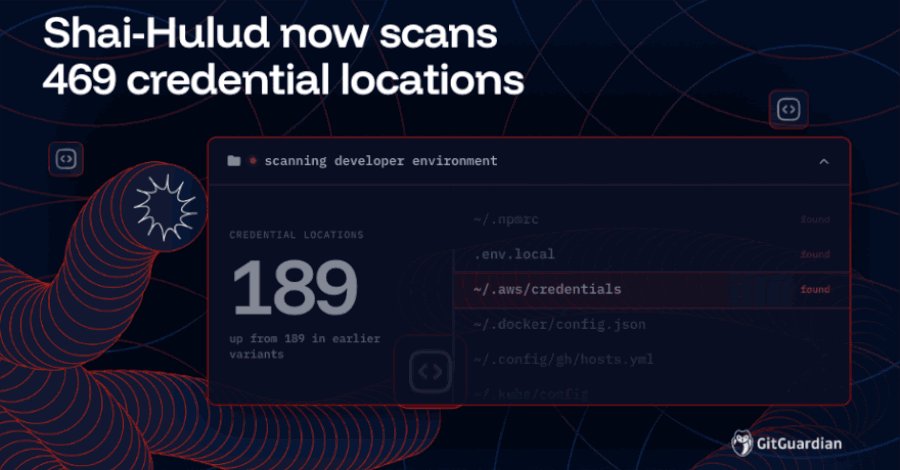
In the early days of August 2026, researchers from GitGuardian discovered a new variant of the Shai-Hulud infostealers that has significantly evolved. This version is capable of scanning credentials at 469 different locations, representing a drastic increase compared to previous variants that only checked 189 paths. The expansion of the attack surface indicates a growing complexity and sophistication of the malware. The new scanning capabilities of the Shai-Hulud worm include not only traditional development environments but also Continuous Integration/Continuous Deployment (CI/CD) tools, cloud configurations, and even settings from AI tools. This versatility makes the malware particularly dangerous, as it can attack at various stages of the software development lifecycle.
Researchers from GitGuardian have found that the malware specifically targets sensitive information stored in these environments. This includes API keys, credentials, and other confidential data that are highly valuable to attackers. The ability to operate in so many different environments increases the likelihood of successful attacks. Another concerning aspect is the speed at which this malware spreads. The researchers reported that the new variant can propagate within minutes in a network after gaining access to a single system.
This poses a significant challenge to the cybersecurity measures of companies. The development of this malware may also have been facilitated by the increasing use of cloud services and DevOps practices in software development. Companies relying on these technologies must be aware of the risks associated with integrating CI/CD tools and cloud environments. To counter the threats posed by the Shai-Hulud infostealer, experts recommend that companies review and strengthen their security protocols. This includes implementing multi-factor authentication and providing regular training for employees to recognize and avoid phishing attacks.
Security solutions should also be capable of detecting suspicious activities in real-time. Research on this malware is still ongoing. GitGuardian plans to conduct further analyses to understand the exact mechanisms behind the operation of the Shai-Hulud worm. The results of these analyses could be crucial for better defending against future attacks. The threat posed by the Shai-Hulud infostealer is an example of the ever-evolving landscape of cybercrime. Companies must take proactive measures to protect their systems and ensure the integrity of their data. According to GitGuardian, the number of affected systems has increased by 30% in recent months.





💬 Comentarii (0)
Inca nu exista comentarii. Fii primul!