


New Theory on Dark Matter in Astronomy
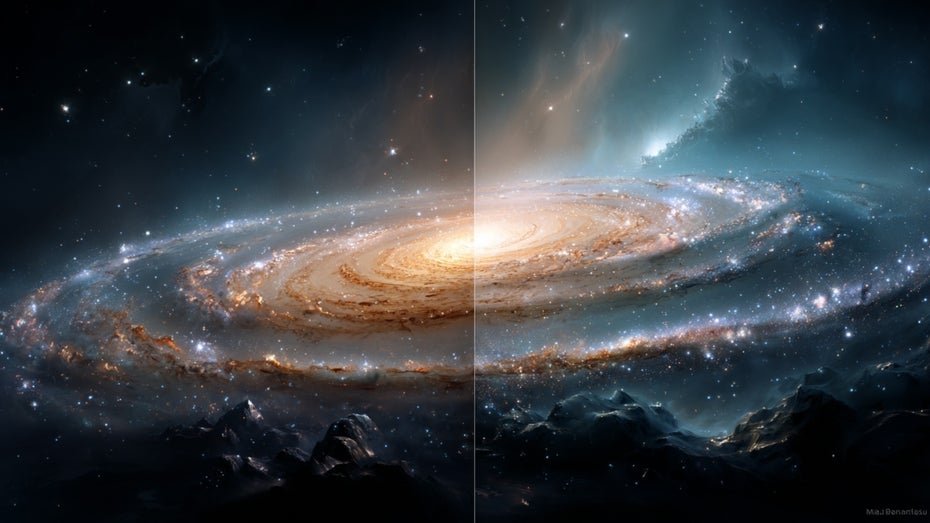
A recent scientific investigation shakes the foundations of the cosmological standard model, which has been the basis of modern astronomy for decades. Researchers have presented alternative explanations for the structure and composition of the universe that call into question the role of dark matter. This new theory could have far-reaching implications for our understanding of the cosmos. The traditional view assumes that about 27% of the matter in the universe consists of dark matter, which cannot be directly observed. This assumption is based on observations of galaxies and their movements, which would be inexplicable without the existence of dark matter.
However, the new study argues that the observed phenomena can also be explained by other mechanisms that do not rely on dark matter. A central element of the new theory is the idea that gravity behaves differently on large scales than previously assumed. Researchers propose that interactions between normal matter and a previously unknown form of energy, referred to as "tired light," could be responsible for the observed effects. This hypothesis could render the need for dark matter unnecessary. The study is based on extensive data analyses and simulations that show that the movements of galaxies and the structure of the universe can also be explained without dark matter.
Researchers have explored various scenarios and found that the results align with the new theory. This could lead to a fundamental reassessment of the physical laws that shape our understanding of the universe. Another aspect of the investigation concerns the role of dark energy, which is blamed for the accelerated expansion of the universe. The new theory suggests that dark energy may not be the only explanation for this expansion. Instead, the interaction between normal matter and the hypothetical "tired light" energy could play a crucial role.
Reactions to the study are mixed. Some scientists welcome the new approaches and call for further investigations, while others remain skeptical and emphasize the need to continue testing existing models. The debate over the existence and role of dark matter and dark energy could be reignited by these new findings. The results of the study were published in a renowned scientific journal and have already attracted the interest of the scientific community. The researchers plan to further test their hypotheses in future experiments and observations.
This could lead to new discoveries that revolutionize our view of the universe. The investigation could also impact the development of new technologies based on the principles of gravity and energy. A better understanding of fundamental forces could lead to innovative applications in space travel and other fields. The researchers emphasize that the results have not only theoretical significance but also practical implications for the future of science.
The discussion surrounding the new theory is expected to intensify in the coming months as further data and analyses are anticipated. The scientific community is eager to see the next steps in this exciting debate about the nature of the universe. The study was published on April 15, 2026.









💬 Comments (0)
No comments yet. Be the first to comment!