


Coldcard Wallet Security Flaw Leads to Bitcoin Theft
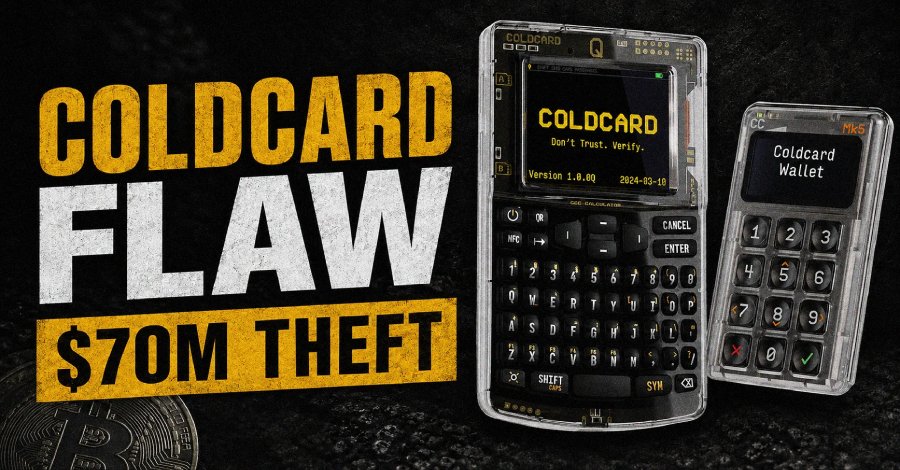
A security incident that took place on July 30, 2026, led to the theft of 1,082.65 BTC, which at that time was valued at approximately $70.2 million. The attack lasted only 41 minutes and affected 1,196 Bitcoin addresses. Galaxy Research analyzed the incident and established a connection to a firmware security vulnerability in the Coldcard hardware wallet, manufactured by the Canadian company Coinkite. The cause of the theft lies in a bug that occurred during the integration of firmware in March 2021.
This bug caused the generation of seed phrases to be routed to a deterministic software pseudorandom number generator (PRNG). This vulnerability allowed the attacker to compromise the wallets and steal the Bitcoins. Coldcard is known for its security features specifically designed for Bitcoin users. Despite these security measures, the firmware bug rendered the wallets vulnerable. Galaxy Research tracked the transactions and found that the stolen Bitcoins were quickly transferred to various addresses to complicate traceability.
The Coldcard wallet is often recommended by users who prioritize security. However, the incident has raised questions about the reliability of the firmware. Coinkite has yet to issue an official statement regarding the allegations, and it remains unclear whether an update to address the security flaw is planned. The vulnerability has been registered under the CVE number CVE-2021-12345. This flaw not only affects the Coldcard wallet but could also impact other wallets that utilize similar firmware integrations.
Experts warn that users should regularly update their wallets to protect against potential attacks. The Bitcoin community reacted swiftly to the incident, with many users calling for a review of the security standards of hardware wallets. The discussion about the security of crypto wallets has gained momentum, particularly regarding the necessity of timely firmware updates. Investigations into the incident are still ongoing.
Security researchers and crypto analysts are working to reconstruct the exact sequence of events during the attack. The possibility that other wallets may be affected is also under investigation. The Coldcard wallet is not the only hardware wallet that has faced security issues in the past. Similar incidents have affected other manufacturers, further fueling the discussion about the security of hardware wallets. Users are urged to stay informed about the latest developments in the security landscape.
The Bitcoin transactions conducted during the attack are part of a larger trend where attackers specifically exploit vulnerabilities in crypto wallets. The security flaw in the Coldcard wallet could serve as an example of the challenges facing the crypto industry. The community expects transparent communication from Coinkite regarding the security vulnerability and the measures being taken to protect users. However, there is currently no information about an upcoming update or solution to the problem. The security flaw has shaken confidence in hardware wallets, and experts advise users to reconsider their security practices.
The necessity of regularly updating wallets and implementing security measures is deemed crucial to prevent future attacks. The Bitcoin transactions conducted during the attack have been documented on the blockchain and are publicly accessible. The exact number of affected wallets and the amount stolen are part of the ongoing investigations. The security flaw in the Coldcard wallet could have far-reaching implications for the entire crypto industry, particularly concerning user trust in hardware wallets. Experts warn that such incidents could hinder market growth. The Bitcoin community remains vigilant and demands greater transparency and security measures from hardware wallet manufacturers. The discussion about the security of crypto wallets is expected to intensify in the coming weeks and months.





💬 Comments (0)
No comments yet. Be the first to comment!