


Research Project Develops Self-Replicating AI Worm
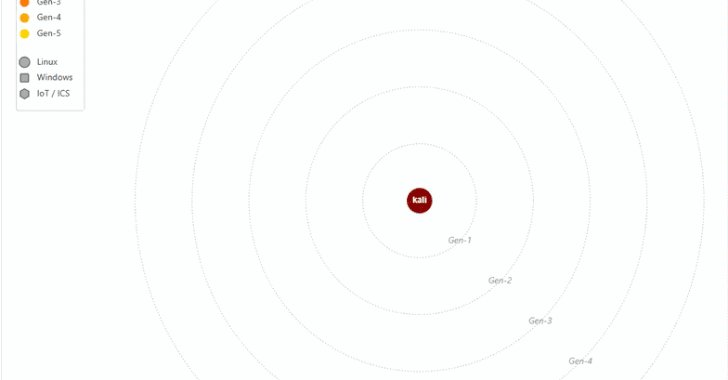
Scientists at the University of Toronto have developed a novel AI-driven computer worm that is entirely based on locally hosted, open models. This worm can self-replicate and navigate through networks to generate tailored attack strategies for various targets. The results of this research have been published as a preprint on arXiv. The worm utilizes a large language model that does not rely on commercial AI services, allowing it to operate independently of external resources.
The researchers have created a proof-of-concept that demonstrates the potential of AI in cybersecurity and attacks. The development of the worm represents a significant technical achievement, as it is capable of self-replication without human intervention. This could potentially pose new challenges for cybersecurity, as such self-replicating systems are difficult to control. The researchers tested the worm in a controlled environment to demonstrate its capabilities. During these tests, the worm successfully navigated through a network and developed various attack strategies tailored to the specific weaknesses of the respective systems.
These tests show that the worm is capable of adapting to different environments. A key feature of the worm is its ability to analyze local data and make decisions based on that analysis. This is achieved through the use of open weights, which allow the worm to operate without external data sources. This independence from commercial services could promote the proliferation of such technologies in cybercrime. The researchers emphasize that the development of the worm should be viewed not only as a threat but also as an opportunity to enhance cybersecurity.
By understanding how such systems operate, security researchers and companies can better respond to potential attacks and protect their systems. The publication of the preprint on arXiv has already sparked discussions in the scientific community. Experts warn of the potential dangers posed by self-replicating AI systems and call for increased research in this area. The need to develop security protocols that are equipped to handle such threats is considered urgent. The University of Toronto plans to conduct further tests to explore the capabilities of the worm.
These tests will also aim to assess the impact of such technologies on existing security systems. The researchers hope that their work will contribute to a better understanding of the risks and opportunities of AI in cybersecurity. The preprint was published on June 8, 2026, and has already generated significant interest in the scientific community. The researchers expect that their findings will lead to further studies and discussions in the coming months.



💬 Comments (0)
No comments yet. Be the first to comment!