


Nine-Year Undiscovered Vulnerability in the Linux Kernel
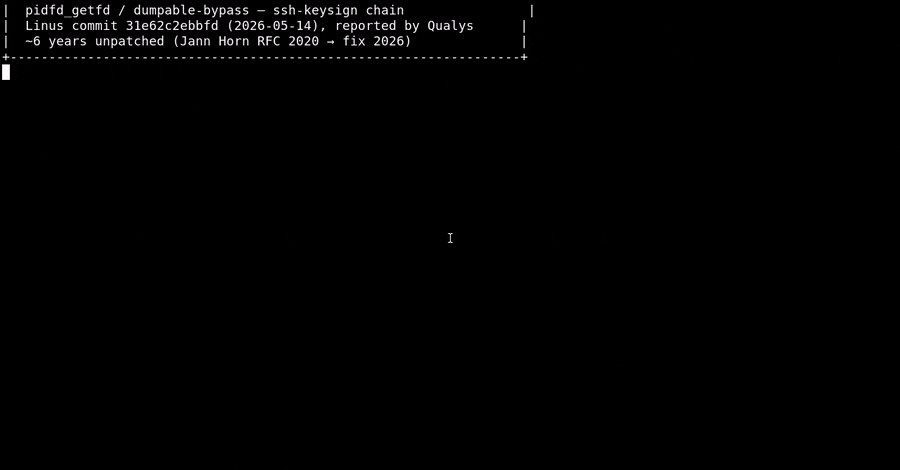
Cybersecurity researchers have uncovered a serious vulnerability in the Linux kernel that remained undetected for nine years. The vulnerability, identified as CVE-2026-46333, affects several popular Linux distributions and allows unprivileged local users to disclose sensitive files and execute arbitrary commands with root privileges. The security flaw arises from an error in the kernel's privilege management. This means that a user without administrative rights can still access critical system resources. The discovery of this vulnerability could have significant implications for the security of systems based on these distributions.
The researchers found that the vulnerability exists in the standard installations of several major Linux distributions, including Ubuntu, Debian, and Fedora. The exact number of affected systems is currently unknown; however, it is estimated that millions of users could potentially be at risk. The CVSS score for this vulnerability is 5.5, classifying it as moderately dangerous. Nevertheless, the ability to gain root access could be of great interest to attackers, especially in corporate environments where such access could lead to significant data losses.
The discovery was made by a team of security experts who identified the vulnerability during their routine security audits. The researchers have forwarded the details of the vulnerability to the developers of the affected distributions to facilitate a swift resolution. The developers' response to this discovery has been prompt. Many distributions have already released or announced updates to address the vulnerability. Users are strongly urged to update their systems to protect against potential attacks.
The security community has emphasized the importance of this discovery. Experts warn that inadequate security measures in the past have allowed such vulnerabilities to remain undetected for long periods. The discovery of CVE-2026-46333 could serve as a wake-up call for the entire open-source community to reassess their security practices. The vulnerability could also have legal consequences for companies that fail to adequately protect their systems. Data protection laws in many countries require companies to implement appropriate security measures to safeguard their customers' data.
Researchers recommend that all users of affected distributions update their systems immediately. Updates are typically available through the official repositories of the respective distributions. Prompt action can help prevent potential attacks and ensure the security of the systems. The vulnerability was made public on May 22, 2026, and developers continue to work on providing patches for all affected systems.



💬 Comments (0)
No comments yet. Be the first to comment!