


Apple Evaluates Chip Production at Intel and Samsung
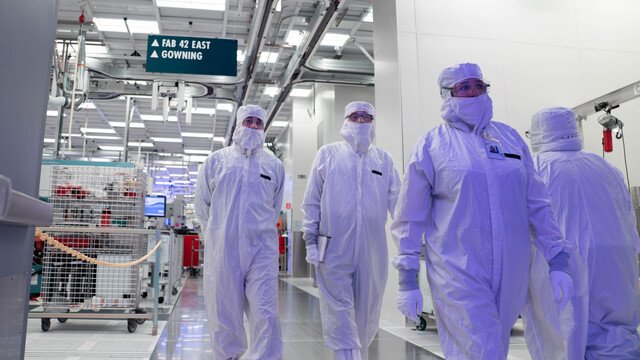
Apple has announced that it is considering the possibility of producing chips at Intel Foundry and Samsung Foundry. This decision comes in a context where the demand for semiconductors is rising globally. Apple finds itself in a position where it may be sidelined as competitors vie for chip availability. Apple's considerations should not be interpreted as a definitive farewell to TSMC. TSMC remains the main supplier for most Apple chips, and the availability and production capacities at Intel and Samsung are still unclear.
Experts point out that TSMC still holds the largest production capacity in the semiconductor market, making it difficult for other suppliers to compete on a large scale. However, discussions with Intel and Samsung may indicate that Apple wants to diversify its dependence on a single supplier. This strategy could help Apple avoid potential bottlenecks in chip supply that have led to production delays in the past. The initial steps in this direction may be small, as Apple will first want to test the feasibility and quality of chips with the new partners. Intel has made significant investments in its manufacturing capabilities in recent years to become more competitive.
The company has announced plans to expand its foundry services to allow third parties like Apple to produce chips in its factories. This initiative could help Intel increase its market share in the semiconductor market. Samsung, on the other hand, already has experience in producing chips for various customers and could offer Apple an attractive option. The South Korean firm has significantly expanded its semiconductor manufacturing capabilities in recent years and is known for its advanced manufacturing technologies. Apple's decision to negotiate with Samsung may also be motivated by the need to bring innovative technologies to market more quickly.
The chip shortage that has affected the industry in recent years has forced many companies to rethink their supply chains. Apple is aware of the risks associated with being overly dependent on a single supplier. Discussions with Intel and Samsung could be part of a broader strategy to enhance supply chain resilience and secure production capacities. Analysts expect that Apple will reveal more details about its plans in the coming months. The first products that may be manufactured at Intel or Samsung could hit the market in the next few years.
However, the exact timeline for these developments remains unclear, as Apple continues to assess the quality and availability of the chips. The decision to collaborate with multiple manufacturers could also impact the pricing and competitiveness of Apple's products. If Apple can source chips at competitive prices, it could positively affect the company's margins. Therefore, negotiations with Intel and Samsung are not just a matter of availability but also of economic efficiency. The chip industry faces a number of challenges, including rising raw material prices and geopolitical tensions that strain supply chains.
Apple will need to consider these factors as it adjusts its chip production strategy. The next steps in this matter could be crucial for Apple's future competitiveness in the technology market. The discussions between Apple and the two foundries are still in the early stages. However, Apple has already met with executives from both companies to discuss potential collaboration.
The discussions could extend to various chip architectures that may be significant for Apple's future products. Chip production is a central component of Apple's business strategy, particularly regarding the development of new products and technologies. The decision to negotiate with Intel and Samsung could have long-term implications for Apple's innovation capacity and market position. The coming months will be critical to see how these discussions evolve and what concrete steps Apple will take.




💬 Comments (0)
No comments yet. Be the first to comment!